Thursday, October 6, 2011
NASA Awards Historic Green Aviation Prize
NASA has awarded the largest prize in aviation history, created to inspire the development of more fuel-efficient aircraft and spark the start of a new electric airplane industry. The technologies demonstrated by the CAFE Green Flight Challenge, sponsored by Google, competitors may end up in general aviation aircraft, spawning new jobs and new industries for the 21st century.
Wednesday, August 31, 2011
Vostok
The Soviet Union's Vostok I carried the first human into space, Yuri Gagarin, on April 12, 1961, upstaging the U.S. Mercury astronauts. The spacecraft consisted of a 2.3 meter spherical cabin with attached instrument module. Further Vostok flights included Vostok 6, flown by Valentina Tereshkova, the first woman in space. After that mission, Vostok morphed into the hastily jury-rigged Voshkod capsule in 1964-1965, a radically modified three-seater which, again, trumped the two-man Gemini spacecraft.
Thursday, August 25, 2011
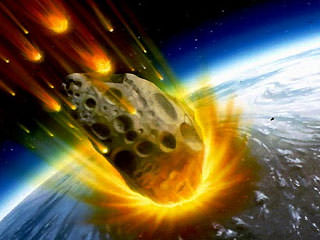
Chinese scientists come up with plan to save Earth from asteroid hit
A group of Chinese scientists have proposed using a solar sail to prevent the possible collision of Apophis, a 46 million ton asteroid, with the Earth in 2036.
The asteroid, which is 270 meters in diameter, will approach Earth at a distance of 37,000-38,000 kilometers in 2029. In 2036 Apophis may come back and collide with Earth on April 13, 2036.
According to scientists, the chance of a collision in 2036 is extremely slim and the asteroid would likely disintegrate into smaller parts and smaller collisions with Earth could occur in the following years.
However, a group of Chinese astronomers headed by Shengping Gong of Tsinghua University in Beijing published an article proposing to place a small spacecraft with a solar sail into a retrograde orbit in order to change the asteroid's trajectory.
The retrograde orbit will give the spacecraft an impact velocity of 90km/s which, if this is done well enough in advance, will prevent Apophis from returning to Earth.
SOURCE : http://www.spacedaily.com/reports/Chinese_scientists_come_up_with_plan_to_save_Earth_from_asteroid_hit_999.html
IAI showcases 'Ghost' spy UAV in U.S.
The mini-helicopter is so compact it can be carried in backpacks, with spare batteries and a computer, by two soldiers who control it from a laptop computer. At 4.76 feet long and a rotor span of 2.46 feet, IAI boasts that the Ghost is small enough to fly into buildings through windows to provide real-time intelligence for Special Forces or company-size infantry units.
Its imaging capabilities, day and night, are enhanced by its ability to provide unique horizontal, or eye-level, visibility for ground forces that lookdown UAVs cannot, giving troops a more comprehensive view of their targets and operational environment. State-owned IAI, flagship of Israel's defense industry and a leading manufacturer of UAVs, first put the Ghost on display in March.
It got its first U.S. outing at the Association of Unmanned Vehicle Systems International last week in Washington with Stark Aerospace, a subsidiary of IAI North America.
The battery-powered craft, with its low acoustic signature and ability to hover, is considered ideal for stealthy surveillance.
That could include tracking suspects marked for assassination by armed UAVs, helicopter gunships or F-16 strike jets using precision-guided munitions, a tactic used frequently by the Israelis against Palestinian militants. IAI, whose Malat Division developed the Ghost, says it's intended "for reconnaissance missions in urban settings" where many of what the Israelis call "targeted killings" take place.
The new craft's ability to take off and land vertically makes it adaptable in rugged combat terrain or deployment on warships. The Ghost uses a pair of powered rotors mounted on rotating shafts at the tip of a fixed wing for loft and propulsion. The engines swivel for takeoff and landing, as well as for hovering. It has a range of around 2.5 miles, a flight endurance of 6 hours and speed of around 37 miles an hour.
It's the second tilt-rotor UAV to be developed by IAI. Malat Division unveiled the Panther, a larger craft, last October. The Panther, also on display at AUVSI, has a takeoff weight of about 138 pounds and a wingspan of 25 feet. It can stay airborne for 6 hours. It's also electrically powered and can be carried in a backpack by a single soldier, IAI says. IAI also produces the Eitan, one of the world's largest UAVs, able to fly higher and longer than most drones.
The Eitan was unveiled in February 2010. It can remain aloft for 24 hours and fly as far from Israel as the Persian Gulf, putting Iran, deemed a strategic threat by Israel, within its reach.
The 4.5-ton, turboprop-powered craft, part of IAI's Heron family which is operational with German and other Western forces in Afghanistan, has a wingspan of 85 feet, slightly small than a Boeing 737 airliner.
It carries a payload of up to 1 ton that includes advanced imaging, radar and mapping systems. It has a ceiling of 43,000 feet.
Boeing Demonstrates Swarm Reconnaissance with Unmanned Aircraft
Boeing has reported the successful autonomous communications and operation of dissimilar unmanned aerial vehicles (UAV) in flight tests over the rugged terrain of eastern Oregon.
The July 7-10 mission used two ScanEagles manufactured by Boeing subsidiary Insitu and one Procerus Unicorn from The Johns Hopkins University Applied Physics Laboratory (JHU/APL). The UAVs communicated using a Mobile Ad Hoc Network and swarm technology developed by JHU/APL.
The UAVs worked together to search the test area through self-generating waypoints and terrain mapping, while simultaneously sending information to teams on the ground. A broader demonstration is planned for the end of September. Swarm technology is similar to how insects communicate and perform tasks as an intelligent group.
"The test team proved that these unmanned aircraft can collect and use data while communicating with each other to support a unified mission. This swarm technology may one day be used for search-and-rescue missions or identifying enemy threats ahead of ground patrols."
"We're excited we were able to demonstrate this capability on deployed vehicles such as the Boeing ScanEagles."
The ScanEagle system also recently took part in the successful test of a Boeing-developed narrowband communications relay that was used to link handheld radios in the mountains of California.
Researchers Improving GPS Accuracy In The Third Dimension
Researchers who are working to fix global positioning system (GPS) errors have devised software to take a more accurate measurement of altitude - particularly in mountainous areas.
The software is still under development, but in initial tests it enabled centimeter-scale GPS positioning - including altitude - as often as 97 percent of the time.
Researchers hope the software will help to improve the vertical accuracy of measurements in potentially hazardous regions at high altitudes, such as areas of soft, loose land that may be prone to landslides. They also claim that their software could be used to measure how quickly glaciers at high altitudes are melting.
The GPS is most commonly known for its ability to provide on-the-spot locations for drivers, but this application is just one of many possible uses, explained Dorota Grejner-Brzezinska, professor of civil and environmental engineering and geodetic science at Ohio State University. As the level of GPS precision increases, so do potential applications for scientific research.
While drivers are generally concerned with tracking their own location in two dimensions on the earth's surface, the third dimension of altitude has always been available through GPS - just with lower accuracy than that of the horizontal coordinates.
Recently, Grejner-Brzezinska and her colleagues from the University of Warmia and Mazury in Poland have developed software that will allow GPS to relay locations to within a few centimeters' accuracy, including altitude.
While this high level of precision is not necessary for driving directions, it is necessary for recognizing small shifts in topsoil that may lead to dangerously destructive landslides.
She explained that a lot is going on behind the scenes during a typical use of GPS.
GPS satellites transmit information in the form of radio waves to the GPS receiver held by the user. At the same time, the signals must also travel to at least one other ground-based receiver to obtain a location reference, which allows the user's receiver in turn to accurately calculate its own position in 3D.
Before the satellite signals reach the receivers, they must travel through Earth's atmosphere, which results in time delays that affect accuracy. When the user's receiver and the reference receiver reside at drastically different altitudes, however, each location experiences different amounts of time delay, which complicates matters even further.
So, in mountainous regions where height differences can vary greatly over a short distance, acquiring the altitude of locations to within a few centimeters is difficult. "Time is the heart that drives GPS, so it is important that we have a proficient method that accounts for delays from earth's atmospheric layers," said Grejner-Brzezinska.
"It would be ideal for all GPS signals to travel in a straight line directly to their destination, but due to electron interaction and refraction in the lower atmosphere, the signal's path is far from straight," she continued.
Electron interaction and tropospheric refraction effectively re-route the GPS signal, which means that the signal travels an extra distance and requires extra time, said Grejner-Brzezinska. She and her colleagues looked specifically at troposphere delays - those caused by the lowest level of the atmosphere. Their study can be found in a recent issue of the journal Measurement Science and Technology.
In the past, scientists have tried to account for troposphere delays by using basic models of Earth's atmosphere, said Grejner-Brzezinska. But these models may not fully account for changes in the weather or temperature, which can have a significant effect on the amount of interference the GPS signals experience on their way down to earth.
Not only weather and temperature, but also the height difference between two stations can greatly affect the accuracy of a GPS-based height determination. Using ground station receivers located in the Carpathian Mountains in Poland - a region known for its steep slopes - the researchers collected GPS information over a 13-hour period.
They looked at two pairs of receivers with different height changes. The first pair was located 72 kilometers apart and had a height difference of 32 meters. The second pair was 66 kilometers apart with a total height difference of 380 meters. "We figured that the easiest scenario would be provided by the receivers with 32-meter height difference, and the most challenging one with a height difference of 380 meters," said Grejner-Brzezinska.
Using processing software developed originally in Grejner-Brzezinska's lab at Ohio State, and further expanded by her research collaborators at the University of Warmia and Mazury in Poland, the researchers applied three different methods to measure GPS accuracy for the receivers.
The results showed that, out of the three methods of handling tropospheric delay in GPS measurements that were tested, there was one that provided an accurate location, including the height of the receivers, 97 percent of the time. "Of the three methods we tested, the third and most accurate was also the most complicated," said Grejner-Brzezinska. "This method was developed by our team, and required knowledge of three or four reference stations in order to perform the calculations properly."
The other two methods did not require the use of multiple reference points - just a single one - but their levels of accuracy did not match the third method's positioning capabilities.
Further testing will follow. But this early study shows that GPS accuracy for altitude estimation can be improved, and may lead to the precision estimates that researchers need to analyze, for example, the stability of mountaintops and glaciers with 10-minute temporal resolution.
This research was funded by the European Space Agency Plan for European Cooperating States project and a grant from the Polish Ministry of Science and Higher Education.
Grejner-Brzezinska's collaborators at the University of Warmia and Mazury include Pawel Wielgosz, Slawomir Cellmer, Jacek Paziewski and Zofia Rzepecka.
Wednesday, June 29, 2011
Space debris a growing problem
A scare triggered by orbital debris that on Tuesday came within a couple of hundred metres (yards) of the International Space Station (ISS) sheds light on an acutely worsening problem. Millions of chunks of metal, plastic and glass are whirling round Earth, the garbage left from 4,600 launches in 54 years of space exploration.
The collision risk is low, but the junk travels at such high speed that even a tiny shard can cripple a satellite costing tens of millions of dollars. Around 16,000 objects bigger than 10 centimetres (four inches) across are tracked by the US Space Surveillance Network, according to NASA's specialist newsletter (http://orbitaldebris.jsc.nasa.gov/newsletter/pdfs/ODQNv15i1.pdf).
There are around 500,000 pieces between one and 10 cms (half and four inches), while the total of particles smaller than one centimetre (half an inch) "probably exceeds tens of millions," NASA says elsewhere on its website.The rubbish comes mainly from old satellites and upper stages of rockets whose residual fuel or other fluids explode while they turn in orbit. As the junk bumps and grinds, more debris results.
Another big source, though, is a Chinese weather satellite, Fengyun-1C, which China destroyed in a test of an anti-satellite weapon in 2007. Debris specialists and satellite operators were incensed. At a stroke, it helped increase the tally of large debris by more than a third. In May 2009, a 10-cm (four-inch) chunk from Fengyun-1C passed within three kilometres (1.8 miles) of the US space shuttle Atlantis, prompting plans for evasive manoeuvres that proved to be unneeded.
Four known collisions have occurred between tracked objects, France's National Centre for Space Studies (CNES) says. In 1991, a Russian navigation satellite, Cosmos 1991, collided with debris from a defunct Russian satellite, Cosmos 926, although this event only came to light in 2005.
In 1996, a fragment from an exploded Ariane rocket launched in 1986 damaged a French spy micro-satellite, Cerise. In 2005, the upper stage of a US Thor launcher hit debris from a Chinese CZ-4 rocket. And in 2009, a disused Russian military satellite, Cosmos 2251, smacked into a US Iridium communications satellite, generating a debris cloud in its own right.
In low Earth orbit, which is where the ISS is deployed, debris impacts at around 10 kilometres (six miles) per second (36,000 kph / 22,400 mph), says the CNES. An aluminium pellet just one millimetre (0.04 of an inch) carries roughly the same kinetic energy as a cricket ball or baseball fired at 450 kph (280 mph). In June 1983, the windscreen of the shuttle Challenger had to be replaced after it was chipped by a paint fleck just 0.3 mm (0.01 of an inch) across that impacted at four kms (2.5 miles) per second.
To cope with such threats, the ISS has some shielding but depends mainly on manoeuvering to get out of the way, an operation it has done several times. Satellites, too, can take evasive action using onboard thrusters, but this is costly because it reduces the craft's operational life. The ISS "is the most heavily shielded spacecraft ever flown," NASA says. "Critical components, e.g. habitable compartments and high pressure tanks, will normally be able to withstand the impact of debris as large as one centimetre (half an inch) in diameter."
On the plus side, at low Earth orbit, debris is only a relatively short-term problem. At orbits below 600 kms (375 miles), the material falls to Earth, where it usually burns up to nothing in the atmosphere, within several years. Beyond 800 kms (500 miles), orbital decay is measured in decades, but beyond 1,000 kms (620 miles), the debris will trundle around the planet for a century or more.
The European Space Agency (ESA), Japan, Russia and the United States have issued guidelines for mitigating the debris problem, such as designing satellites and spacecraft so that they can be deliberately "de-orbited," using a fuel reserve, rather than let them drift in space. Leading space agencies have also formed a panel to address the problem and the issue is also discussed in the UN's Committee on the Peaceful Uses of Outer Space (COPUOS).
soorce :
The collision risk is low, but the junk travels at such high speed that even a tiny shard can cripple a satellite costing tens of millions of dollars. Around 16,000 objects bigger than 10 centimetres (four inches) across are tracked by the US Space Surveillance Network, according to NASA's specialist newsletter (http://orbitaldebris.jsc.nasa.gov/newsletter/pdfs/ODQNv15i1.pdf).
There are around 500,000 pieces between one and 10 cms (half and four inches), while the total of particles smaller than one centimetre (half an inch) "probably exceeds tens of millions," NASA says elsewhere on its website.The rubbish comes mainly from old satellites and upper stages of rockets whose residual fuel or other fluids explode while they turn in orbit. As the junk bumps and grinds, more debris results.
Another big source, though, is a Chinese weather satellite, Fengyun-1C, which China destroyed in a test of an anti-satellite weapon in 2007. Debris specialists and satellite operators were incensed. At a stroke, it helped increase the tally of large debris by more than a third. In May 2009, a 10-cm (four-inch) chunk from Fengyun-1C passed within three kilometres (1.8 miles) of the US space shuttle Atlantis, prompting plans for evasive manoeuvres that proved to be unneeded.
Four known collisions have occurred between tracked objects, France's National Centre for Space Studies (CNES) says. In 1991, a Russian navigation satellite, Cosmos 1991, collided with debris from a defunct Russian satellite, Cosmos 926, although this event only came to light in 2005.
In 1996, a fragment from an exploded Ariane rocket launched in 1986 damaged a French spy micro-satellite, Cerise. In 2005, the upper stage of a US Thor launcher hit debris from a Chinese CZ-4 rocket. And in 2009, a disused Russian military satellite, Cosmos 2251, smacked into a US Iridium communications satellite, generating a debris cloud in its own right.
In low Earth orbit, which is where the ISS is deployed, debris impacts at around 10 kilometres (six miles) per second (36,000 kph / 22,400 mph), says the CNES. An aluminium pellet just one millimetre (0.04 of an inch) carries roughly the same kinetic energy as a cricket ball or baseball fired at 450 kph (280 mph). In June 1983, the windscreen of the shuttle Challenger had to be replaced after it was chipped by a paint fleck just 0.3 mm (0.01 of an inch) across that impacted at four kms (2.5 miles) per second.
To cope with such threats, the ISS has some shielding but depends mainly on manoeuvering to get out of the way, an operation it has done several times. Satellites, too, can take evasive action using onboard thrusters, but this is costly because it reduces the craft's operational life. The ISS "is the most heavily shielded spacecraft ever flown," NASA says. "Critical components, e.g. habitable compartments and high pressure tanks, will normally be able to withstand the impact of debris as large as one centimetre (half an inch) in diameter."
On the plus side, at low Earth orbit, debris is only a relatively short-term problem. At orbits below 600 kms (375 miles), the material falls to Earth, where it usually burns up to nothing in the atmosphere, within several years. Beyond 800 kms (500 miles), orbital decay is measured in decades, but beyond 1,000 kms (620 miles), the debris will trundle around the planet for a century or more.
The European Space Agency (ESA), Japan, Russia and the United States have issued guidelines for mitigating the debris problem, such as designing satellites and spacecraft so that they can be deliberately "de-orbited," using a fuel reserve, rather than let them drift in space. Leading space agencies have also formed a panel to address the problem and the issue is also discussed in the UN's Committee on the Peaceful Uses of Outer Space (COPUOS).
soorce :
http://orbitaldebris.jsc.nasa.gov/newsletter/pdfs/ODQNv15i1.pdf
http://www.aero.org/corporation/AerospaceAR.pdf
http://www.spacemart.com/reports/Space_debris_a_growing_problem_999.html
Summary of Recovered Reentry Debris
![]() |
| http://aero.org |
This page lists the major pieces of recovered debris from space hardware reentries over the years. If you are aware of recovered debris not appearing here, please e-mail a description of the debris, and provide references to supporting evidence, e.g., news articles, government reports, photographs, etc.
We will add sufficiently corroborated events to our list.The first forty-four items listed below were adapted from: Senate Committee on Aeronautical and Space Sciences, "Convention on International Liability for Damage Caused by Space Objects: Analysis and Background Data," U.S. Government Printing Office, May, 1972.
Source : http://reentrynews.aero.org/recovered.html, http://www.aero.org/corporation/AerospaceAR.pdfEvent | Remarks | |
1. | An unknown number of pieces of debris from a space object were reported to have fallen in South Africa in September 1960. | May have resulted from unsuccessful attempt to launch an Atlas/Able. |
2. | An unknown number of rocket motor and propellant tank pieces were reported to have fallen in Cuba in November 1960. | Believed to be sub-orbital debris from failure of a Thor booster used to launch the Transit-IIIA satellite on 30 November 1960. |
3. | In March and June 1962 eleven pieces of stainless steel skin (average mass 2.7 kg) and one sustainer rocket engine spherical pressure bottle (0.56 m diameter, mass 21.7 kg) were found in Brazil and South Africa. | Identified as pieces from Atlas booster for Mercury MA-6 mission, launched 20 February 1962. |
4. | In July 1962 a spherical pressure vessel about 0.4 m in diameter was found near Porto Allegre, Brazil. | Part of a U.S. Air Force test satellite. |
5. | In September 1962 a cylindrical metal piece (diameter 0.15 m, mass 9.5 kg) fell on a street intersection in Manitowoc, Wisconsin. | Identified as part of Soviet Sputnik IV, launched 15 May 1960. |
6. | In October 1962 three pieces of stainless steel skin (average size 0.9 x 1.2 m) and one piece of aluminum with steel nut, bolt, and washer attached (about 5 x 5 cm, mass 0.22 kg) were found in the Ivory Coast and Upper Volta. | Identified as pieces from Atlas booster for Mercury MA-8 mission, launched 3 October 1962. |
7. | In April and June 1963 two spherical pressure vessels were found near Broken Hill, New South Wales, Australia. | Believed to be from U.S. Agena rocket stage used to launch U.S. Air Force test satellites on 14 December 1962 and 7 January 1963. Both rocket stages reentered from orbit in January 1963. |
8. | In May 1963 a piece of stainless steel skin (0.42 m², mass 2.7 kg) was found near Concordia, Argentina. | Identified as part of the Atlas booster for Mercury MA-9 mission, launched 15 May 1963. |
9. | In May 1963 a piece 0.3 x 0.38 m was found about 200 km north of Pretoria, South Africa. | Believed to be part of a Soviet spacecraft. |
10. | In March 1964 a metal spherical pressure vessel (mass 11 kg) fell near Belem, Brazil. | Believed to be part of a DoD Agena rocket stage. |
11. | In March 1964 an undetermined number of fragments fell in British Columbia, Canada. | Believed to be of Soviet origin. |
12. | In May 1964 a charred piece of electronic equipment (mass 79 kg) was found near La Fria, Venezuela. | Identified as part of a DoD satellite launched 27 April 1964, which reentered 26 May 1964. |
13. | In December 1964 and January 1965 a metal sphere (diameter 0.84 m), an aluminum cylinder (4 x 1.5 m) and four fragments of a rocket nozzle were found in northern Argentina. | Identified as pieces from a DoD Titan III booster stage, possibly from a Trans-stage launched 10 December 1964, which reentered 13 December 1964. |
14. | In January 1965 a piece of woven asbestos sheet was found in Malawi. | Identity not confirmed. |
15. | In early 1965 an object having the appearance of a space fragment was reported washed ashore on Abaco Island in the Bahamas. | Possibly from the Atlas-Mariner I booster which was destroyed by the range safety officer shortly after launch on 22 July 1962, and landed in the designated ocean impact area. |
16. | In June 1965 three pieces believed to be space fragments were found in the Madiya Pradesh and Kota districts of India. | Believed to be pieces from a DoD Titan IIIC development test launched 18 June 1965. |
17. | In September 1965 a titanium sphere (diameter 0.5 m), called the Merkanooka ball, was found in Australia. | Identified as a tank used for drinking water in Gemini V spacecraft launched 21 August 1965, components of which reentered in late August 1965. |
18. | In December 1965 three metal spheres fell near Seville, Spain. | Believed to have been parts from Soviet Luna 8 rocket stage, launched 3 December 1965, parts of which reentered on 5 and 6 December 1965. |
19. | In March 1966 a piece of plastic shroud (about 1.2 x 1.5 m) was found in Australia. | Identified as part from Echo II, launched 25 January 1964, one part of which reentered 23 February 1966. |
20. | In April 1966 a helium pressure sphere (diameter 1 m, mass 113.3 kg) was found by crew of Brazilian fishing boat at sea off coast of Brazil. | Identified as part of S-IVB stage of Saturn booster sub-orbital test that was launched 26 February 1966, and landed in the designated ocean impact area. |
21. | In May 1966 a piece of lightweight metal (0.5 x 0.3 m), an oval-shaped metal piece (0.4 x 0.2 m), a black beehive-shaped piece (10 x 12 cm), and four pieces of fragile wire were found in the Rio Negro District of Brazil. | Identified as parts of S-IVB stage of Saturn development test (SA-5) launched 29 January 1964, which reentered 30 April 1966. |
22. | In June 1966 a fragment believed to have returned from space was found in Colombia. | Identified as part of Atlas booster used to launch Agena target vehicle either for Gemini 8 or Gemini 9A (launched 16 March and 1 June 1966). Probably from Gemini 9A target vehicle booster. |
23. | In July 1966 a piece of lightweight metal (4.7 x 2.6 m) and a piece of aluminum (3.3 x 5.1 m) were found in Peru and Zambia, respectively. In August and November 1966 a truncated cone metal piece (5.4 kg) and a smaller piece were found in Swaziland. | Identified as pieces from S-IVB stage of Apollo-Saturn development test (AS-203) launched 5 July 1966. |
24. | In October 1966 a titanium spherical pressure vessel (diameter 0.37 m, mass 13.6 kg) was found near Tomahawk, Wisconsin. | Identified as Soviet in origin. |
25. | In January 1967 a metal sphere (diameter 0.58 m, mass 15.8 kg) was found in Peru. | Identified as part of Delta booster used to launch Biosatellite-1 on 14 December 1966. |
26. | In February 1967 two spherical pressure vessels were found in Mexico. One sphere was titanium with a diameter of 0.6 m and a mass of 30 kg; the other sphere had a diameter of 0.36 m. | Believed to be Parts from the upper stage or experiments associated with a U.S. Air Force Titan IIIC. |
27. | In July 1967 a titanium sphere (diameter 0.6 m), a flat metal piece with bolts, and a titanium sphere (circumference 0.98 m) were found in Mexico. | Identified as parts from Agena target vehicle launched 11 November 1966, in connection with Gemini XII mission. |
28. | In September 1967 a spherical pressure vessel (diameter 0.6 m) was found in Saudi Arabia. | Identified as part of Delta booster used to launch Explorer 35 on 19 July 1967. |
29. | In December 1967 a metal piece (1 x 1.8 m, mass 10 kg) was found in Finland. | Believed to be part of a Soviet vehicle. |
30. | In February 1968 a metal fragment (1 x 3 m, mass 57.5 kg) and in June 1970 a metal sphere (diameter 0.9 m) were found in Colombia. | Identified as parts of lunar module descent stage used in Apollo V test mission, launched 22 January 1968. |
31. | In March 1968 a triangular cone-shaped piece (0.3 x 1.2 m, mass 10-15 kg) a metal disc (10-12 cm in diameter), and a small oval-shaped metal piece fell in the Gandaki Zone of Nepal. | Believed to be of Soviet origin. |
32. | In April 1968 a metal sphere (diameter 0.6 m, mass 29 kg) was found near Mudgee, Australia. | Identified as pressure vessel from Delta booster used to launch Biosatellite-II on 7 September 1967. |
33. | In April 1968 several pieces of plastic material in panel sections (0.23 x 0.23 m) were found in Angola. | Identified as pieces of insulation from 3rd stage of Apollo VI booster, launched 4 April 1968. |
34. | In August 1968 a metal sphere (diameter 0.71 m, mass 20 kg) was found in eastern Colombia. | Believed to be of U.S. origin. |
35. | In September 1968 a spherical pressure vessel (diameter 0.37 m, mass 14.5 kg) was found near Nome, Alaska. | Identified as Soviet in origin. |
36. | In June 1969 numerous fragments (about 10 kg each) fell on a Japanese freighter off De Kastri Fort U.S.S.R. | Pieces believed to be of Soviet origin. |
37. | In July 1969 a small fragment (about 30 cm long) fell on the deck of a German ship in the Atlantic Ocean. Other pieces fell in the water near the ship. | Identified as debris from the first stage of the Saturn booster used to launch Apollo 11 on 16 July 1969. |
38. | In September 1969 a metal pressure sphere (diameter 0.38 m, mass 13.8 kg) was found near Ostersound, Sweden. | Believed to be of Soviet origin. |
39. | In December 1969 a cylindrical piece (about 1 m in diameter) washed ashore hear Marie Galante, Martinique. | Believed to be from the shroud of an Atlas booster that had been jettisoned in the designated ocean impact area. |
40. | In April 1970 a metal fragment was found in the West Cape area of South Africa. | Believed to be part of Soviet spacecraft. |
41. | In July 1970 a spherical pressure vessel was found near Lai, Chad. | Probably part of a Soviet vehicle. |
42. | In August 1970 five oblong pieces of steel (0.6-0.8 m long, mass about 70 kg each) and one flat steel plate (1.2 x 1.2 m, mass 290 kg) fell in Kansas, Texas, and Oklahoma. | Identified as parts from Soviet Cosmos 316, launched 23 December 1969, which reentered 28 August 1970. |
43. | In March and April 1971 three spherical pressure vessels were found in North Dakota. | Determined to be of U.S. origin. |
44. | In April 1972 four titanium pressure spheres (diameter 0.38 m, mass 13.6 kg each) were found in an area near Ashburton, New Zealand. A fifth sphere was found six years later near Eiffelton, New Zealand. | Probably from Soviet Cosmos 482, launched 31 March 1972, part of which reentered 2 April 1972. |
45. | In January 1978 numerous fragments fell in the Northwest Territories of Canada. The debris consisted largely of rods (2 x 10 cm, average mass 55 g), and cylinders (10 x 40 cm, mass 3.6 kg) constructed mostly from beryllium. | Identified as debris from Soviet Cosmos 954, launched 18 September 1977, which reentered 24 January 1978. |
46. | In June 1988 a titanium pressure sphere (diameter 0.37 m) was found in region of Marble Bar, Australia. | Probably from Soviet Foton 4, launched 14 April 1988, reentered 28 April 1988. |
47. | In February 1991 numerous fragments fell on and around the town of Capitan Bermudez, Argentina. | Identified as debris from Soviet Salyut 7/Cosmos 1686, launched 19 April 1982, which reentered 7 February 1991. |
48. | In December 1994 a metal plate (2.4 x 2.4 m, mass 20 kg) was found in Cosala, Mexico. | Probably from Russian Cosmos 2267, launched 5 November 1993, which reentered 28 December 1994. |
49. | In January 1997 a steel propellant tank (1.7 x 2.7 m, mass 270 kg) landed near Georgetown, Texas. A titanium pressure sphere (diameter 0.58 m, mass 32 kg), and a composite combustion chamber (0.76 m long, average width 0.25 m) landed near Seguin, Texas. A lightweight fragment of charred woven material (10 x 13 cm) struck a woman in Turley, Oklahoma. She was not injured. | Identified as debris from 2nd stage of Delta II booster, used to launch Midcourse Space Experiment on 24 April 1996. Stage reentered 22 January 1997. |
50. | In April 2000 a steel propellant tank (1.7 x 2.7 m, mass 270 kg), a titanium pressure sphere (diameter 0.58 m, mass 32 kg), and a composite combustion chamber (0.76 m long, average width 0.25 m) landed near Capetown, South Africa. | Identified as debris from 2nd stage of Delta II booster, used to launch GPS IIA-25 on 28 March 1996. Stage reentered 27 April 2000. |
51. | In October 2000 a metal fragment (10 x 18 cm) was found near Wichita, Kansas. | Probably part of 4th-stage casing from Russian Proton booster, used to launch three Glonass navigation satellites on 13 October 2000. The casing reentered on 14 October 2000. |
52. | In January 2001 a titanium rocket-motor casing (diameter 1.2 m, length 2 m, mass 70 kg) was found in Saudi Arabia, 240 km west of Riyadh. | Identified as debris from 3rd stage of Delta II booster used to launch GPS IIA-20 on 13 May 1993. Stage reentered 12 January 2001. |
53. | In March 2002 a titanium pressure sphere (diameter ~1 m, mass 49 kg) landed in a home in Kasambya, Uganda. No damage or injuries were reported. | Identified as debris from 3rd stage of Ariane 3 booster used to launch GStar 1 and Telecom 1B on 8 May 1985. Stage reentered 27 March 2002. |
54. | In August 2002 a large sphere (diameter ~0.5 m, mass ~10 kg) landed near the village of Manzau, Angola. | Probably debris from 3rd stage of Ariane 4 booster used to launch Atlantic Bird 2 satellite on 25 September 2001. Stage reentered 11 August 2002. |
55. | In April 2003 a composite-overwrapped sphere landed on a farm near Mataquesquintla, Guatemala. | Probably debris from Centaur stage of Atlas IIAS booster used to launch Intelsat 806 satellite on 28 February 1998. Stage reentered 27 April 2003. |
56. | In January 2004 a titanium rocket-motor casing (diameter 1.2 m, length 2 m, mass 70 kg) was found near San Roque in Argentina. | Identified as debris from 3rd stage of Delta II booster used to launch GPS IIA-23 on 26 October 1993. Stage reentered 20 January 2004. |
57. | In July 2004 a metal pressure sphere (diameter ~0.5 m, mass ~30 kg) landed near Cabeça da Vaca, Brazil. A metal fragment (length ~1 m) landed near Batalha, Brazil. | Probably debris from 2nd stage of Delta II booster, used to launch Mars Exploration Rover B (Opportunity) on 8 July 2003. Stage reentered 25 July 2004. |
58. | In January 2005 a titanium rocket-motor casing (diameter ~1 m, length ~2 m) was found near Bangkok, Thailand. | Identified as debris from 3rd stage of Delta II booster used to launch GPS IIR-6 on 10 November 2000. Stage reentered 13 January 2005. |
59. | In March 2008 a composite-overwrapped sphere (diameter ~0.5 m, mass ~10 kg) landed on a farm near Montividiu, Brazil. | Probably debris from Centaur stage of Atlas V booster used to launch WGS-2(F1) satellite on 10 October 2007. Stage reentered 22 March 2008. |
60. | In July 2008 a metal rocket-motor casing was found in Australia. | Identified as debris from 3rd stage of Delta II booster used to launch INSAT-1D on 12 June 1990. Stage reentered 5 September 1990. |
61. | In February 2010 a steel propellant tank (1.7 x 2.7 m, mass 250 kg), and two titanium pressure spheres (diameter 0.6 m, mass 30 kg; diameter 0.4 m, mass 10 kg), landed in Mongolia. | Identified as debris from 2nd stage of Delta II booster, launched on 25 September 2009. Stage reported to have reentered 19 February 2010. |
62. | In February 2011 several metal objects were found in Malawi. | Probably debris from 3rd stage of GSLV booster used to launch INSAT-4CR on 2 September 2007. Stage reentered 7 February 2011. |
63. | In March 2011 a titanium rocket-motor casing (diameter ~1 m, length ~2 m) was found near Artigas, Uruguay. | Identified as debris from 3rd stage of Delta II booster used to launch GPS IIR-10 on 21 December 2003. Stage reentered 3 March 2011. |
64. | In March 2011 a metallic sphere (diameter ~0.76 m, mass ~36 kg) was found near Baggs, Wyoming. | Probably a helium pressure tank from 2nd stage of Zenit 3F booster, launched 20 January 2011, reentered 19 March 2011. |
Subscribe to:
Posts (Atom)